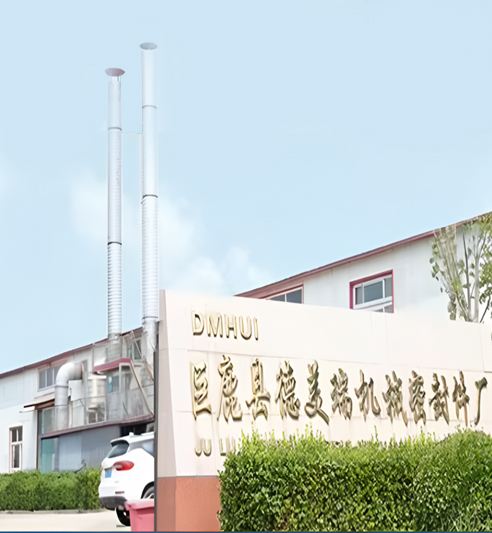
For 43 years, one rule remains unbroken: We only produce high quality oil seals.
Every day, we test materials, measure tolerances, verify pressure limits, and refine processes—
so your equipment runs longer, and you sleep better.
FKM(by ASTM D1418 standard) (equivalent toFPMby ISO/DIN 1629 standard) is the designation for about 80% offluoroelastomersas defined inASTMD1418. Other fluorinated elastomers areperfluoro-elastomers(FFKM) andtetrafluoro ethylene/propylene rubbers(FEPM). All FKMs containvinylidenefluoride as a monomer. Originally developed byDuPont(Viton), FKMs are today also produced byDaikinChemical (Dai-El),3M's Dyneon (Dyneon Fluoroelastomers),SolvaySpecialty Polymers (Tecnoflon), HaloPolymer (Elaftor) and several Chinese manufacturers. Viton is now manufactured byChemours. Fluoroelastomers are more expensive thanneopreneornitrile rubberelastomers. They provide additional heat and chemical resistance. FKMs can be divided into different classes on the basis of either their chemical composition, their fluorine content or their crosslinking mechanism.
On the basis of their chemical composition FKMs can be divided into the following types:
Type 1 FKMs are composed ofvinylidene fluoride(VDF) andhexafluoropropylene(HFP). Copolymers are the standard type of FKMs showing a good overall performance. Their fluorine content typically ranges around 66 weight percent.
Type 2 FKMs are composed of VDF, HFP, andtetrafluoroethylene(TFE). Terpolymers have a higher fluorine content compared to copolymers (typically between 68 and 69 weight percent fluorine), which results in better chemical and heat resistance. Compression set and low temperature flexibility may be affected negatively.
Type 3 FKMs are composed of VDF, TFE, and perfluoromethylvinylether (PMVE). The addition of PMVE provides better low temperature flexibility compared to copolymers and terpolymers. Typically the fluorine content of type 3 FKMs ranges from 62 to 68 weight percent.
Type 4 FKMs are composed ofpropylene, TFE, and VDF. While base resistance is increased in type 4 FKMs, their swelling properties especially in hydrocarbons are worsened. Typically they have a fluorine content of about 67 weight percent.
Type 5 FKMs are composed of VDF, HFP, TFE, PMVE, andEthylene. Type 5 FKM is known for base resistance and high temperaturehydrogen sulfideresistance.